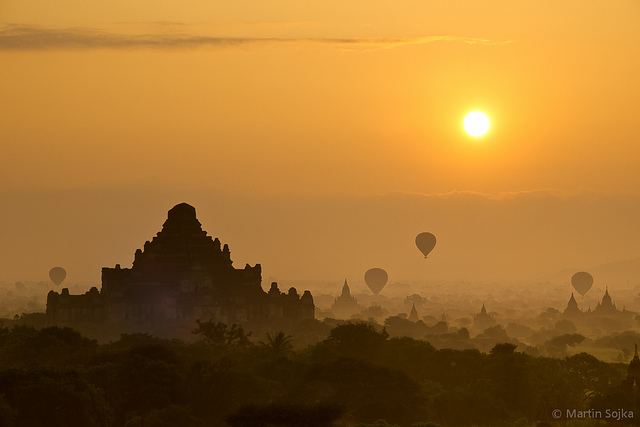
The Burmese Dream: Dawn flight over Bagan. Martin Sojka, Visual Escapes
Anyone arriving in Myanmar and expecting paradise preserved is journeying to disappointment. A golf course greets you as you come into land at Yangon’s main airport and small Samsung adverts are on all immigration desks, a foretaste of the hideous giant billboards that line the roads to the city centre. It is quite a culture shock for all those Westerners who have been anticipating the tourist-free, land-in-a-timewarp charm, that has been implicitly peddled in the travel pages of the Sunday papers and by their tour company paymasters. But many Westerners, particularly the British, don’t actually want to be in Myanmar; they are trying to find Burma.
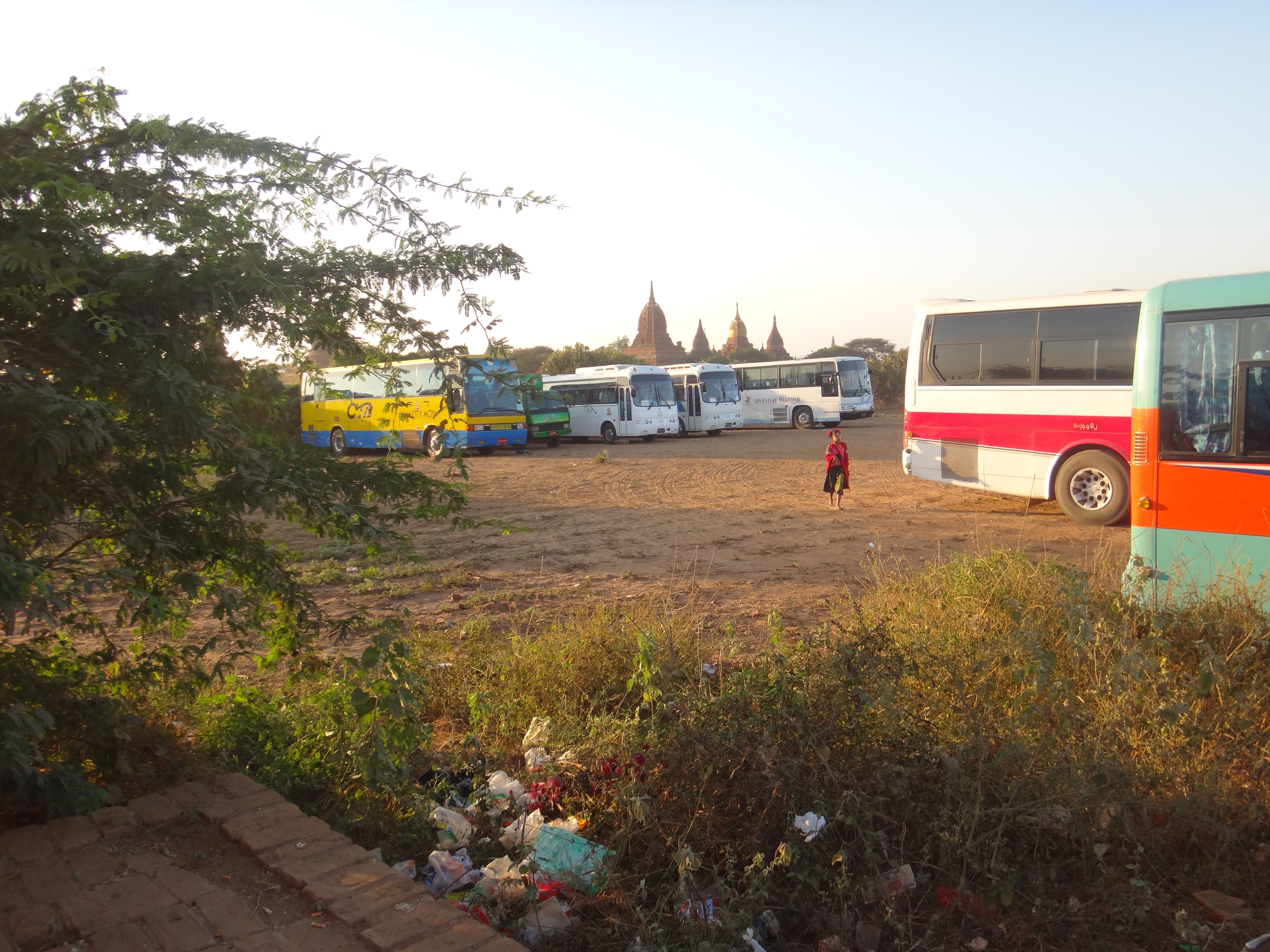
The Myanmar reality: coaches outside the Shwedagon pagoda, Bagan
Most Burma-hunters are on some sort of package: those who aren’t are few and far between, not least because of the absence of visitor-friendly infrastructure. To go to Myanmar is indeed to step back in time – to a world where almost nowhere accepts credit cards, there are very few ATMs, your mobile phone doesn’t work at all, anywhere, wifi is intermittent at best and the few Internet cafes are apologetic. Despite all this, it’s possible to avoid the dreaded tour buses and their aged occupants, whose Lonely Planet ‘night life’ section will remain unread in favour of swotting up on pagodas and kvetching on Trip Advisor about the lumpiness of their mattresses. Received wisdom holds that the Yangon-Mandalay-Bagan-Lake Inle trail followed by all the tours needs to be booked months in advance. Outside of the peakiest season that’s wrong. All you need is a couple of nights booked in Yangon, a fistful of shiny new dollars, a local travel agent, a willingness to wing it and a dirt cheap ticket back to Bangkok on Air Asia – should all else fail.
George Orwell’s ‘Burmese Days’ – fake copies of which are flogged outside every major pagoda – is a portrait of 1920s colonial life among a small community of British ex-pats in an isolated station, whose existences are centred on the Club, which all but one are determined to keep as Whites Only. The dissident, Flory, knows that the game is up for Empire, but his moral cowardice prevents him from supporting Club membership for his friend, the Indian doctor, Veraswami. Rings are run round the bored, whisky-soaked pukka-sahibs by the wily local magistrate, U Po Kyin. Orwell captures the heat-induced ennui, the racism and the nascent independence movement against British rule. Flory is the misfit: an Englishman out to make his fortune exploiting Burma who appreciates Burmese culture. The allure of Burma – or rather Burmese women – is central to ‘Mandalay’, Kipling’s poem that for more than a century has distilled and instilled a view of the mysterious, magical East. Not bad for someone who was in the country for just three days. (George Webb)
The news that dozens of Spitfires – the most iconic British plane in history – could about to be unearthed seems to underline the existence of a Burmese-British special relationship, at least in the minds of many British. British rule over Burma was brief compared with neighbouring India, but has left its mark. Colonial-era buildings, many of them now in need of rescue, include the law courts and the railway offices, while the railway network itself is an imperial relic. Yangon’s Taukkyan War Cemetery, commemorating the 27,000 Commonwealth troops who died during the Burma campaign against the Japanese in the ‘forgotten war’, is surely more evidence of the countries’ ties. Cementing the comforting fiction of the Burmese-British bond is Aung San Suu Kyi, educated in Britain and married to a British academic. Overlooked is that she derives much of her local prestige not only from her stance against military rule and her international recognition, but that she is the daughter of the revered General Aung San who led the fight against the British and delivered Burmese independence.
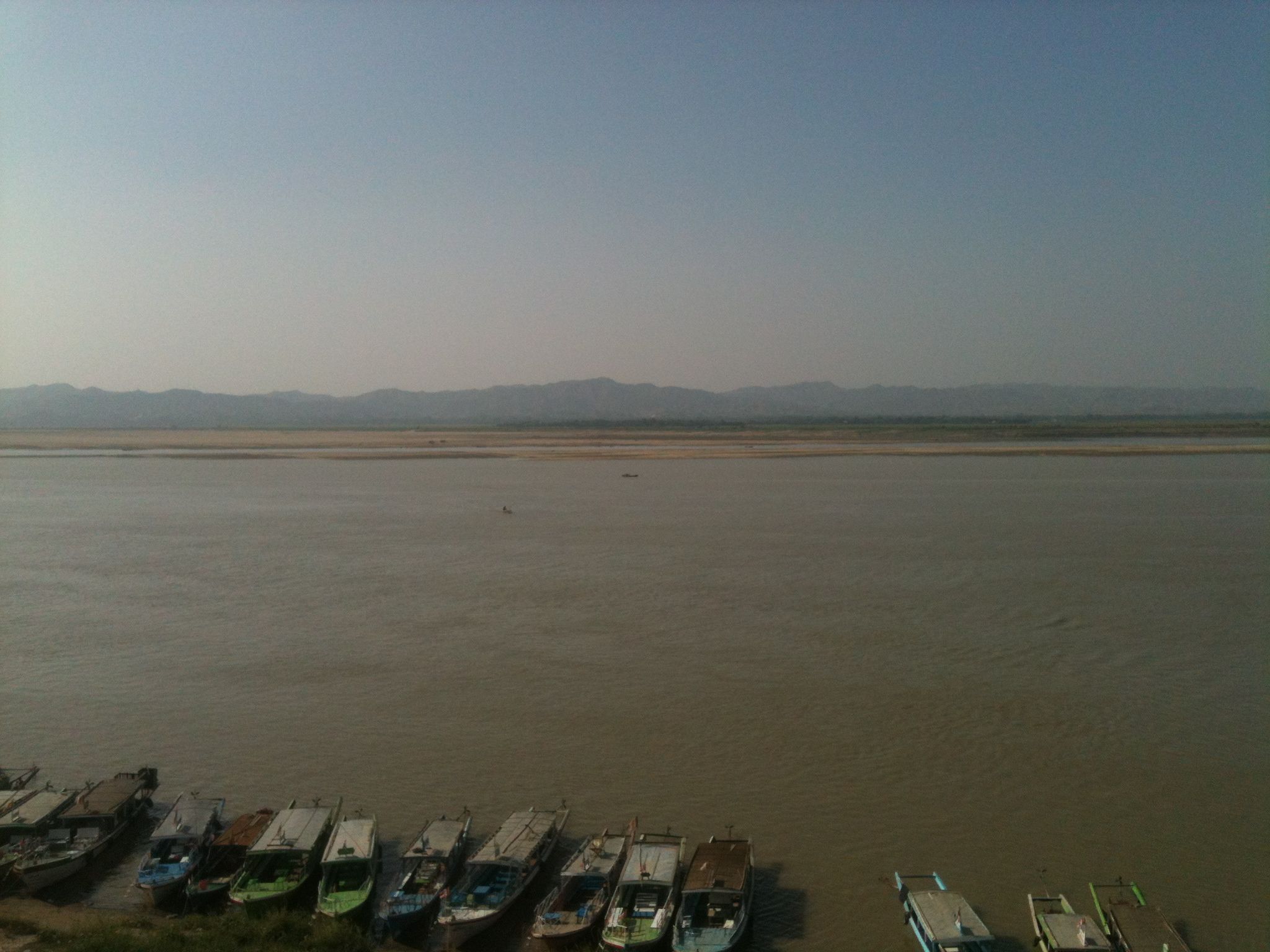
Irrawaddy River at dusk
The reality of Myanmar pours icy water on visitors’ dreams of ballooning-over-Bagan, steaming-up-the-Irrawaddy Burma. Of the three most famous hotels in Yangon, the small Governor’s Residence probably best panders to the fantasy but at $600 a night so it should; Traders is a modern high-rise next to a main road, while the slightly mildewed Strand invokes Somerset Maugham. Angry Birds tee-shirts, the English Premier League, hustlers flogging postcards and knick-knacks, Skynet dishes and lousy 4×4 drivers hardly give the impression of isolation and autarchy.
The 20-year imposition of sanctions and declarations of pariah status by the West cut little ice with some of Myanmar’s nearer neighbours, who themselves are hardly bastions of free speech and democracy. While corporations in the US and EU have been given the green light by their governments to set up shop in Yangon, they might find it already a little crowded. Those golf courses have been around for a while.
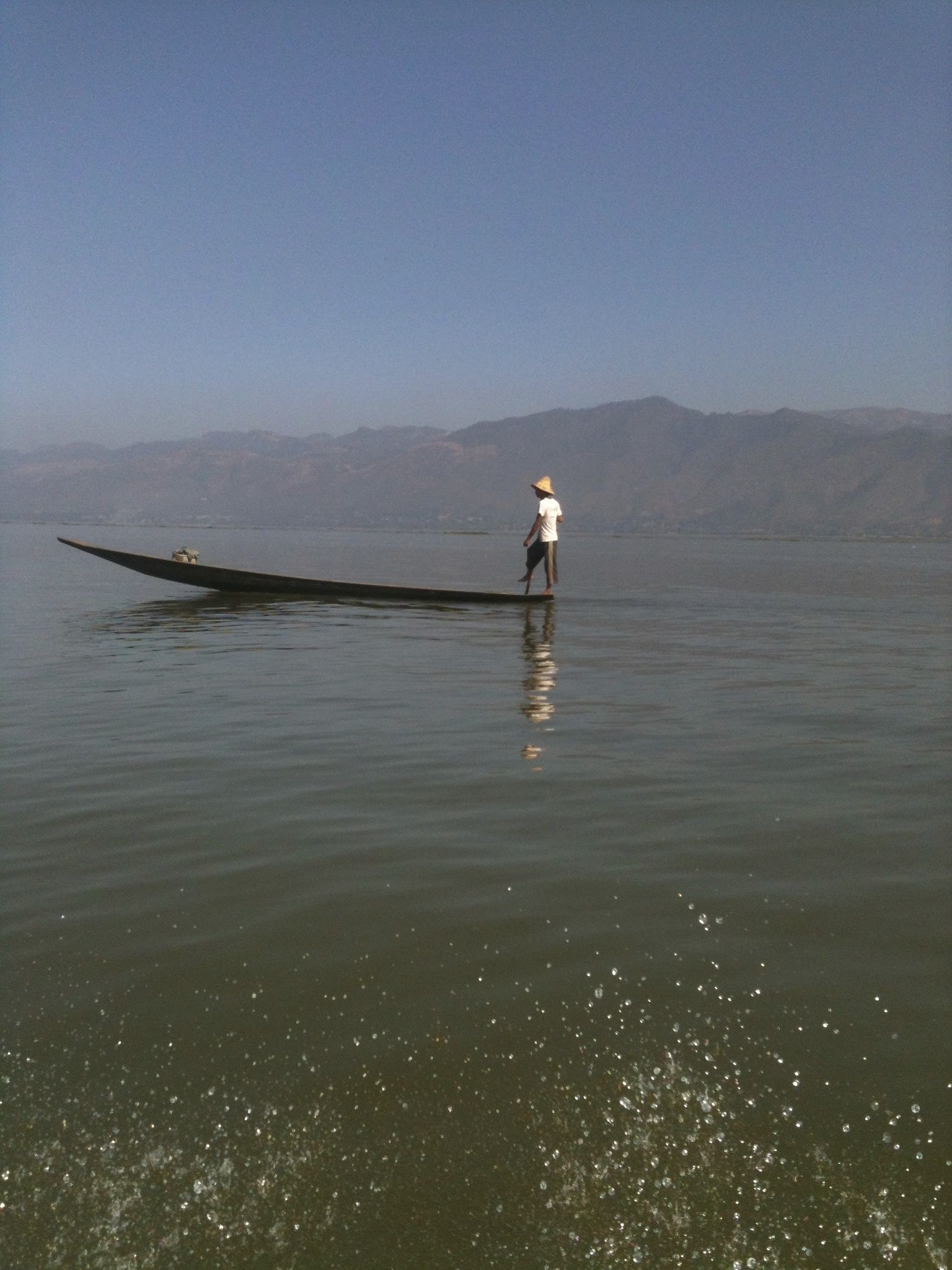
Inle Lake, possibly the most beautiful area of Myanmar
 UrbanHunterLondon